
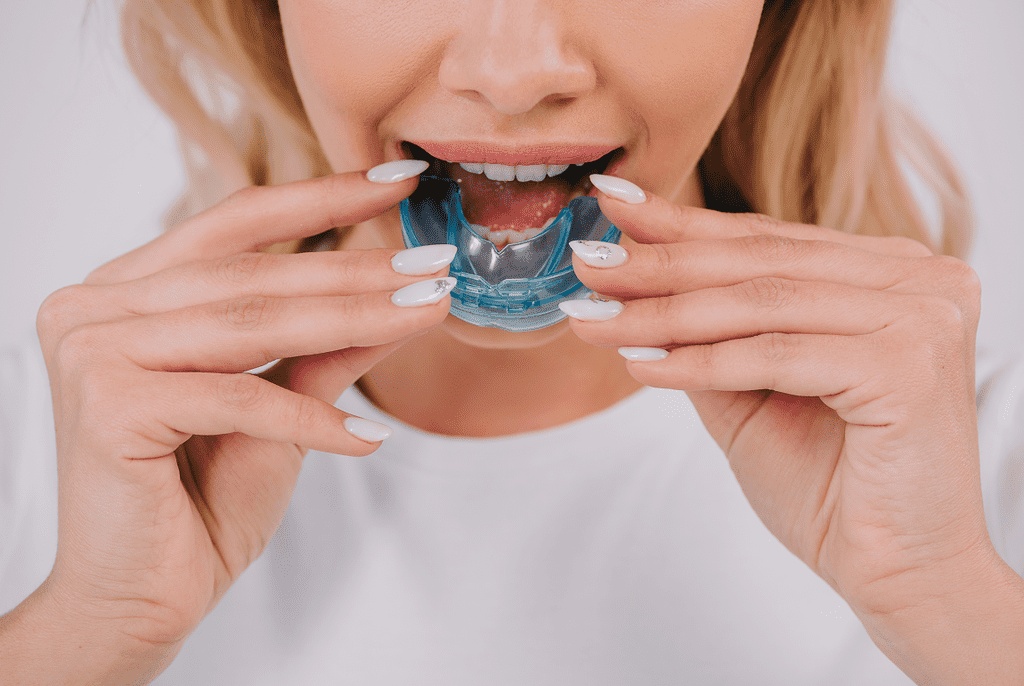
If you have obstructive sleep apnea, your healthcare provider may discuss different treatment options based on the severity of your condition and your individual needs. One option for some adults is a custom oral appliance, sometimes searched for online as a “sleep apnea mouth guard.”
Unlike a regular night guard that mainly protects teeth from grinding, a sleep apnea oral appliance is designed to support the jaw and help keep the airway more open during sleep. Oral appliance therapy is generally used as part of a professionally managed sleep apnea treatment plan, not as a substitute for proper diagnosis. Clinical guidance supports custom, adjustable oral appliances for selected adults with obstructive sleep apnea, including some patients who cannot tolerate CPAP or prefer an alternative when appropriate.
What Is a Sleep Apnea Mouth Guard?
A sleep apnea mouth guard is more accurately called a sleep apnea oral appliance or mandibular advancement device.
It is a custom-fitted dental appliance worn while sleeping. The appliance gently holds the lower jaw in a slightly forward position. This can help reduce the tendency of the tongue and surrounding soft tissues to narrow or block the airway during sleep.
A professionally made sleep apnea appliance is different from an over-the-counter mouth guard. Treatment should be based on your diagnosis, oral health, bite, jaw condition, and broader sleep-care plan.
How Does a Sleep Apnea Mouth Guard Work?
Obstructive sleep apnea occurs when the upper airway repeatedly becomes narrowed or blocked during sleep.
A mandibular advancement appliance works by positioning and stabilizing the lower jaw slightly forward. This change can help maintain more space in the upper airway and reduce obstructive breathing events in appropriately selected patients.
The appliance does not permanently move your jaw forward. You wear it while sleeping and remove it when you wake up.
How much advancement is appropriate varies from person to person, which is one reason a custom, adjustable appliance and professional follow-up are important.
Sleep Apnea Mouth Guard vs. Regular Night Guard
A sleep apnea oral appliance and a regular dental night guard may look somewhat similar, but they have different purposes.
| Sleep Apnea Oral Appliance | Regular Night Guard |
| Designed to support the airway | Mainly designed to protect teeth |
| May position the lower jaw forward | Usually does not advance the jaw |
| Used as part of sleep apnea care | Commonly used for grinding or clenching |
| Requires sleep and dental assessment | Primarily based on dental protection needs |
| Requires monitoring and adjustment | Usually requires less complex adjustment |
If you grind your teeth and also have symptoms or a diagnosis of sleep apnea, do not assume that a standard night guard will treat both concerns.
Who May Be a Candidate for Oral Appliance Therapy?
Oral appliance therapy may be considered for some adults who have been diagnosed with obstructive sleep apnea.
Whether it is suitable can depend on your sleep apnea diagnosis, severity, teeth and gum health, jaw relationship, existing dental work, ability to wear the appliance consistently, and recommendations from the healthcare professionals involved in your sleep care.
Clinical guidance recommends considering oral appliances for adults with OSA who are unable to tolerate CPAP or who prefer an alternative therapy when clinically appropriate. CPAP remains an important and highly effective treatment for obstructive sleep apnea and may be more appropriate for many patients.
At Avyan Family Dental, oral appliance suitability is considered in the context of your diagnosis and dental needs rather than assuming one treatment works for everyone.
What Happens During Sleep Apnea Oral Appliance Treatment?
Treatment begins with understanding your health history, sleep concerns, diagnosis, and current treatment.
Your dentist may evaluate your teeth, gums, jaw joints, bite, and available space before deciding whether a dental appliance can be considered. Digital scans or impressions may then be used to create a custom device.
Once the appliance is fitted, adjustments may be made gradually to find a position that supports the treatment plan while remaining tolerable for your teeth and jaw.
Follow-up matters. Clinical guidelines recommend dental oversight to monitor issues such as tooth discomfort, jaw symptoms, and bite changes, along with appropriate sleep-medicine follow-up to confirm whether treatment is effectively managing the sleep apnea.
Potential Benefits of a Sleep Apnea Oral Appliance
For suitable patients, an oral appliance can provide a treatment option that is small, removable, and portable. It does not require a mask, tubing, or bedside machine while being worn.
Some patients also find an oral appliance easier to travel with than a CPAP device.
The goal, however, is not simply convenience. The appliance needs to provide appropriate airway support for the individual patient. Treatment effectiveness should therefore be monitored rather than judged only by whether snoring improves.
Sleep Apnea Mouth Guard vs. CPAP
CPAP and oral appliance therapy manage obstructive sleep apnea in different ways.
CPAP delivers pressurized air through a mask to help prevent the airway from closing during sleep.
A sleep apnea oral appliance mechanically supports the lower jaw in a forward position to help maintain airway space.
CPAP is generally more effective at reducing sleep-disordered breathing and improving oxygen measures, while oral appliance therapy can be a useful alternative for appropriately selected patients. The right option depends on your diagnosis, treatment response, health considerations, and recommendations from your sleep-care team.
You should not discontinue or replace prescribed CPAP treatment without discussing it with the clinician managing your sleep apnea.
Possible Side Effects and the Adjustment Period
It can take time to become comfortable sleeping with an oral appliance.
Some people may temporarily experience increased saliva, dry mouth, tooth sensitivity, jaw or muscle soreness, or a feeling that their bite is different after removing the appliance.
Longer-term tooth movement or bite changes can also occur in some patients, which is why routine follow-up with the dentist providing the appliance is important.
If an appliance becomes uncomfortable, loose, damaged, or no longer fits properly, have it checked rather than trying to adjust it yourself.
How to Care for a Sleep Apnea Oral Appliance
Your appliance should be cleaned regularly according to the instructions provided with it. Keep it in its protective case when it is not being worn and avoid exposing it to excessive heat, which could affect its shape.
Continue brushing and flossing normally, and bring the appliance to follow-up dental appointments when requested. Avyan Family Dental also advises patients to wear the appliance as instructed, clean it daily, store it safely, and report discomfort to the dental team.
When to Talk to a Dentist About an Oral Appliance
If you have already been diagnosed with obstructive sleep apnea and are interested in an oral appliance, a dental evaluation can help determine whether your teeth, gums, jaw, and bite are suitable for this type of treatment.
Persistent snoring, gasping during sleep, disrupted sleep, or daytime fatigue can also be reasons to discuss your symptoms with an appropriate healthcare professional. Snoring alone does not confirm sleep apnea, and sleep apnea should not be self-diagnosed based only on symptoms.
A dentist can be part of a collaborative care approach, while diagnosis and ongoing sleep-apnea management may involve a physician or sleep-care provider.
Sleep Apnea Oral Appliance Therapy in NW Calgary
Avyan Family Dental provides sleep apnea therapy in NW Calgary, including custom oral appliance care for appropriately selected patients. The process includes reviewing your needs, assessing your oral health, fitting the appliance, and providing follow-up guidance.
The practice also provides airway-focused dental assessments for concerns involving sleep, breathing, mouth breathing, and related oral factors.
Oral appliance therapy should be personalized to your diagnosis and coordinated with your broader healthcare plan where appropriate.
Interested in a Sleep Apnea Oral Appliance?
If you have been diagnosed with obstructive sleep apnea and want to know whether an oral appliance may be an option, Avyan Family Dental can evaluate your teeth, gums, jaw, and bite and discuss the next steps.
SCHEDULE A SLEEP APNEA CONSULTATION