A comfortable CPAP alternative. Custom oral appliances for snoring and sleep apnea, fitted at our Royal Oak clinic in partnership with your family physician.
Please note: we don’t provide sleep testing. Your family physician orders the sleep study. Already diagnosed? Call us to book a consultation.
Obstructive sleep apnea (OSA) happens when the airway repeatedly narrows or closes during sleep, briefly interrupting your breathing. Common signs include:
If several of these sound familiar, talk to your doctor or book a consultation with us. Untreated sleep apnea is linked to high blood pressure, heart problems and the risk of drowsy driving, so it’s worth checking.
Snoring vs. sleep apnea: not everyone who snores has sleep apnea, but snoring is one of its most common signs. Only a sleep test can tell the difference.
Sleep apnea is diagnosed by a physician, through a sleep test. A dentist can’t diagnose sleep apnea, and our clinic does not provide sleep testing. Here’s how the steps fit together:
You complete an objective sleep screening questionnaire, and we do a clinical airway assessment of your airway, jaw, bite and oral tissues.
Your family physician orders the sleep test. We don’t provide sleep testing at our clinic.
Your physician reviews the results and confirms whether you have sleep apnea and how severe it is.
For snoring, for mild to moderate OSA, or if you can’t tolerate CPAP, an oral appliance may be recommended. We take it from there.
Already diagnosed? Bring your sleep study report, or have your doctor send it, and we can start at the consultation step.

CPAP (continuous positive airway pressure) is a very effective treatment. But many people find the mask, hose and noise hard to live with, and a CPAP that sits in the closet doesn’t help anyone. For people with mild to moderate obstructive sleep apnea, or those who can’t tolerate CPAP, an oral appliance is a recognized alternative.
How it works: we make a custom mandibular advancement device (MAD), sometimes called a sleep apnea mouth guard. It fits over your upper and lower teeth and holds your lower jaw slightly forward while you sleep. This helps keep your airway open and reduces snoring.
| CPAP | Oral appliance (MAD) | |
|---|---|---|
| How it works | Air pressure through a mask | Holds the jaw slightly forward |
| Best suited for | All severities, especially severe OSA | Snoring; mild to moderate OSA; CPAP-intolerant patients |
| Noise, hose or power | Yes | No |
| Travel | Bulky machine | Fits in a small case |
| Who provides it | Your physician or a respiratory therapy provider | Your dentist, following a physician’s diagnosis |
Some patients use both, for example CPAP at home and an appliance when travelling. Severe sleep apnea usually still calls for CPAP, and your physician will guide that decision.
We review your sleep history, any sleep study results, your medical history, and your teeth, gums and jaw joints. An appliance needs healthy teeth to anchor to. We’ll also go over your treatment options and the associated costs.
We take precise digital scans of your teeth to make your custom appliance.
We fit the appliance, make sure it’s comfortable, and show you how to wear and clean it.
Over the following weeks, we fine-tune the jaw position to balance comfort and airflow.
We check how you’re sleeping and how the appliance feels. Where it’s clinically appropriate, a follow-up sleep test may be recommended to confirm the appliance is working.
We check the appliance, your bite and your jaw at your regular visits.
Side effects to know about: some people notice temporary jaw soreness, extra saliva, or a slightly changed bite in the morning. These usually settle quickly, and we monitor your bite over time.
Sleep-disordered breathing doesn’t only affect adults. Children can show signs early, and these can affect their sleep, behaviour, focus and how their jaws and face develop. Watch for:
Our approach focuses on early intervention. We support healthy growth and airway development while your child is still growing, when guidance can make the biggest difference. Depending on your child’s needs, this may include myofunctional therapy, palatal expansion or other growth-guidance appliances, and coordination with your child’s physician.
Wherever your child is in their development, it’s never too late to take a closer look. Learn more on our airway dental health page, our orthodontic treatment page, and our blog post How to Stop Snoring and Mouth Breathing in Kids and Adults.
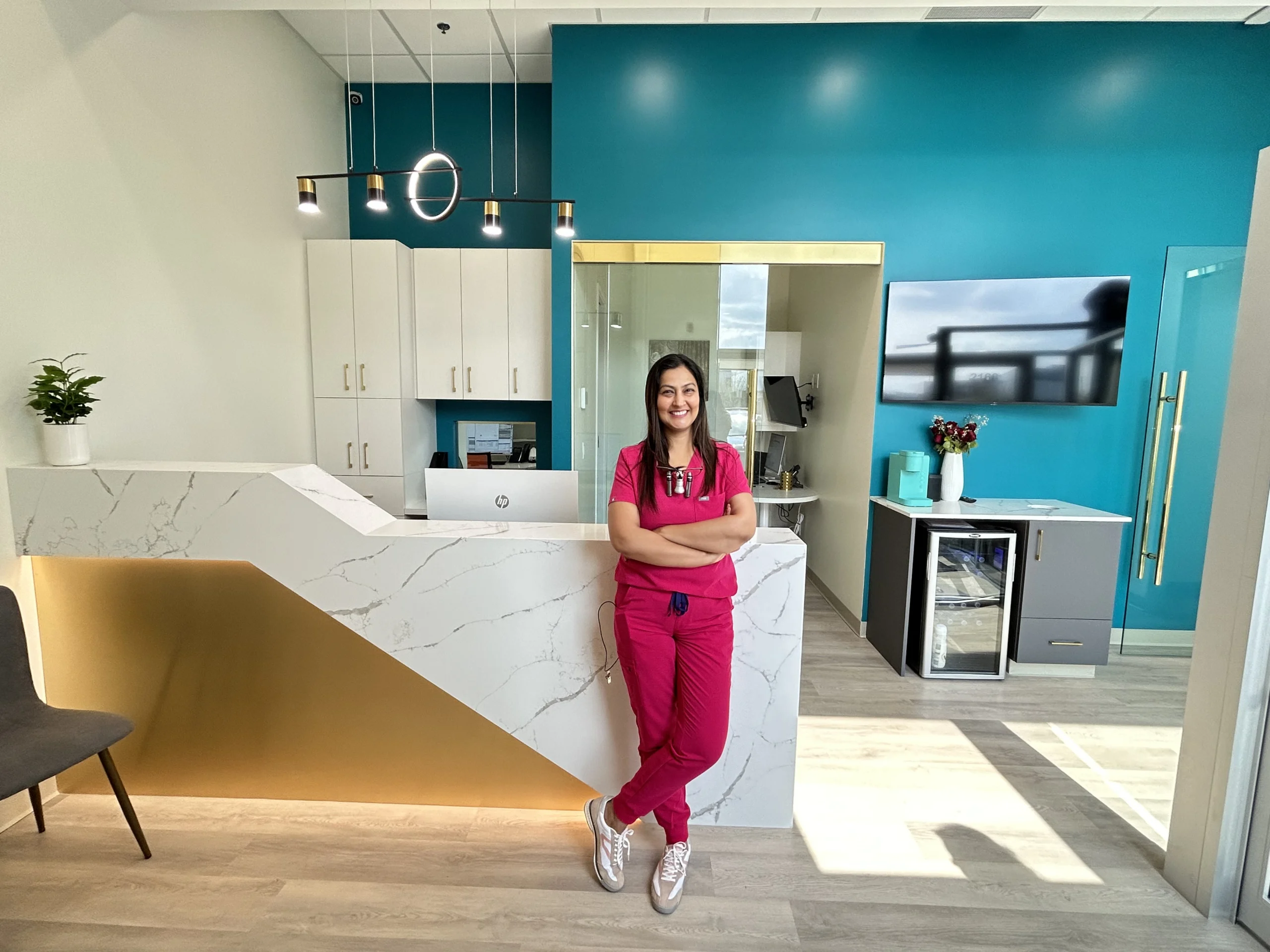
We’re committed to providing supportive, patient-centred care in a welcoming setting and focus on comfort and clear communication.
Interested in learning more? Visit this page now!


 Trustindex verifies that the original source of the review is Google.
 Trustindex verifies that the original source of the review is Google.
 Trustindex verifies that the original source of the review is Google.
 Trustindex verifies that the original source of the review is Google.
 Trustindex verifies that the original source of the review is Google.

 Trustindex verifies that the original source of the review is Google.
 Trustindex verifies that the original source of the review is Google.
 Trustindex verifies that the original source of the review is Google.
 Trustindex verifies that the original source of the review is Google.
If snoring or CPAP is keeping you (or your partner) awake, or you’ve noticed signs in your child, book a consultation at 4 Royal Vista Way NW #2160, or call (587) 358-2160.
A dentist can’t diagnose sleep apnea. Once a physician has diagnosed it, a dentist can make and fit a custom oral appliance to treat snoring and mild to moderate obstructive sleep apnea. We work alongside your family physician throughout.
Yes. For many people with mild to moderate OSA, or anyone who can’t tolerate CPAP, a custom oral appliance is a recognized alternative. Your physician will advise what suits your diagnosis.
Ask your family physician. They order the sleep test and receive the results. Avyan Family Dental does not provide sleep testing. Once you’ve been diagnosed, call us to book a consultation for an oral appliance.
For many people, yes. By holding the jaw slightly forward, the appliance helps keep the airway open, which usually reduces snoring significantly. Because snoring can be a sign of sleep apnea, we recommend screening and a sleep test before treating snoring alone.
Coverage varies by plan. Sleep apnea appliances may be covered under medical or extended health benefits rather than dental. We’ll help you understand what to ask your insurance provider.
Every case is different. You’ll receive an individualized estimate after a clinical assessment, and we discuss treatment options and costs at your consultation.
Most people adjust within one to two weeks. Mild jaw soreness in the morning is common at first and usually fades. We see you again at about 2-3 months to check how it’s working.
Yes. Mouth breathing, snoring, restless sleep, oral habits and a narrow palate can all be signs. We focus on early intervention to support healthy growth and airway development, but it’s never too late to have your child assessed.