
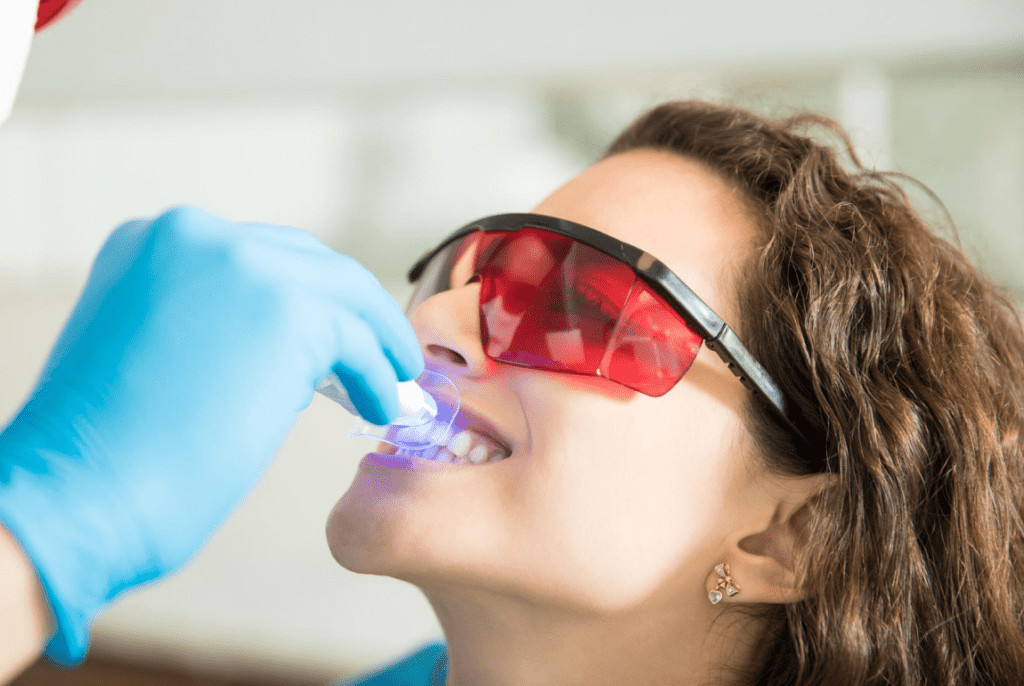
Teeth whitening results can last from about six months to three years, depending on the whitening method, your diet, oral hygiene, and how quickly new stains develop. Professional whitening often provides longer-lasting results when combined with good maintenance and occasional touch-ups.
How Long Does Professional Teeth Whitening Last?
Professional teeth whitening can keep teeth noticeably brighter for months or even years, but the results are not permanent.
How long your results last depends largely on your habits. Coffee, tea, red wine, tobacco, and other stain producing substances can gradually darken teeth again.
How Long Does In-Office Teeth Whitening Last?
In-office teeth whitening uses professional strength whitening agents to produce noticeable results in a shorter treatment time.
The whitening itself does not permanently change your tooth color. Over time, new surface stains can develop and natural tooth discoloration can continue.
Patients who limit staining foods and drinks and maintain good oral hygiene generally keep their results longer.
How Long Does At-Home Teeth Whitening Last?
Results from at-home whitening depend on the product and how consistently it is used.
Dentist provided whitening trays usually use hydrogen peroxide or carbamide peroxide gel and can provide noticeable whitening when used as directed. Over the counter strips and gels may also whiten teeth, but they often take longer to achieve comparable results.
What Affects How Long Teeth Whitening Results Last?
Several factors influence teeth whitening longevity.
Coffee and Tea
Coffee and tea contain pigments that can contribute to new extrinsic stains on the enamel.
Tobacco Use
Smoking and other tobacco use can cause significant tooth staining and may shorten the time teeth remain bright after whitening.
Diet
Red wine, dark berries, cola, and highly pigmented foods and sauces can gradually stain teeth.
Oral Hygiene
Regular brushing, flossing, and professional cleanings help reduce plaque and surface stain buildup.
Your Natural Tooth Color
Whitening removes or reduces discoloration, but your natural tooth shade and the type of staining affect the final result.
Type of Stain
Extrinsic stains on the tooth surface generally respond differently from deeper intrinsic discoloration. Some deep stains may also require more treatment to achieve noticeable improvement.
How Can You Make Teeth Whitening Last Longer?
Good whitening maintenance can help preserve your results.
-
- Brush twice a day
-
- Clean between your teeth daily
-
- Attend regular dental cleanings
-
- Limit coffee, tea, red wine, and tobacco
-
- Rinse with water after consuming stain-causing drinks
-
- Follow your dentist’s recommendations for whitening touch-ups
These habits cannot prevent all future discoloration, but they can help keep your smile brighter for longer.
How Often Should You Whiten Your Teeth?
There is no single whitening schedule that is appropriate for everyone.
How often you need a whitening touch-up depends on the original treatment, your tooth sensitivity, staining habits, and the whitening product being used.
Avoid repeatedly whitening your teeth simply because the color begins to change. Excessive use of whitening products can increase the risk of tooth sensitivity and gum irritation.
For professional whitening, your dentist can recommend an appropriate touch-up schedule based on your teeth and previous treatment.
Do Whitening Trays Help Maintain Results?
Yes. Custom whitening trays may be used for initial whitening or occasional maintenance when recommended by a dentist.
The trays hold whitening gel against the teeth and allow patients to complete treatment at home.
Professional whitening gels commonly use hydrogen peroxide or carbamide peroxide as their active bleaching ingredients.
Internal link: Link custom whitening trays to your Teeth Whitening service page if this treatment is offered.
Does Tooth Sensitivity Affect Whitening Maintenance?
Temporary tooth sensitivity is one of the most common side effects of teeth whitening.
If your teeth become sensitive, your dentist may recommend changing the whitening frequency, treatment time, or whitening product rather than continuing frequent applications.
Persistent or significant sensitivity should be evaluated before additional whitening.
Will Teeth Stay White Permanently After Whitening?
No. Teeth whitening is not permanent.
Natural aging and exposure to foods, drinks, and tobacco can gradually cause new discoloration. Occasional professional or at home touch-ups may help maintain whitening results.
Crowns, veneers, fillings, and other tooth colored restorations also do not whiten the same way as natural enamel.
Keep Your Teeth Whitening Results Looking Brighter
Teeth whitening does not last forever, but good oral hygiene, fewer stain-causing habits, and appropriate whitening touch-ups can help extend your results.
If you are considering whitening or want to refresh previous results, a dentist can recommend an option based on your current tooth shade and oral health.
Frequently Asked Questions
How long does teeth whitening last?
Teeth whitening results may last approximately six months to three years, depending on the whitening method, oral hygiene, diet, tobacco use, and maintenance.
How long does professional teeth whitening last?
Professional whitening can remain noticeable for months or years. Patients who minimize stain-causing habits and maintain good oral hygiene may keep their results longer.
How long do white teeth stay white after whitening?
There is no fixed timeframe. Teeth gradually darken as new stains accumulate and natural discoloration continues.
How often should you whiten your teeth?
Whitening frequency depends on the product, your previous treatment, sensitivity, and staining habits. Follow your dentist’s instructions rather than whitening more frequently than recommended.
How often can you get professional teeth whitening?
The appropriate interval varies by patient and whitening system. Your dentist can determine when another professional treatment or a smaller touch-up is appropriate.
Does coffee make teeth yellow again after whitening?x
Coffee can contribute to new surface stains after whitening. Limiting frequent exposure and rinsing with water afterward may help reduce staining.